
Send the Receipt Where the Customer Can Find It Again
Paper receipts get lost in pockets, bags, and car seats. Offer the receipt by text or email instead, keep your own copy the same way every time, and returns get much easier for both sides.
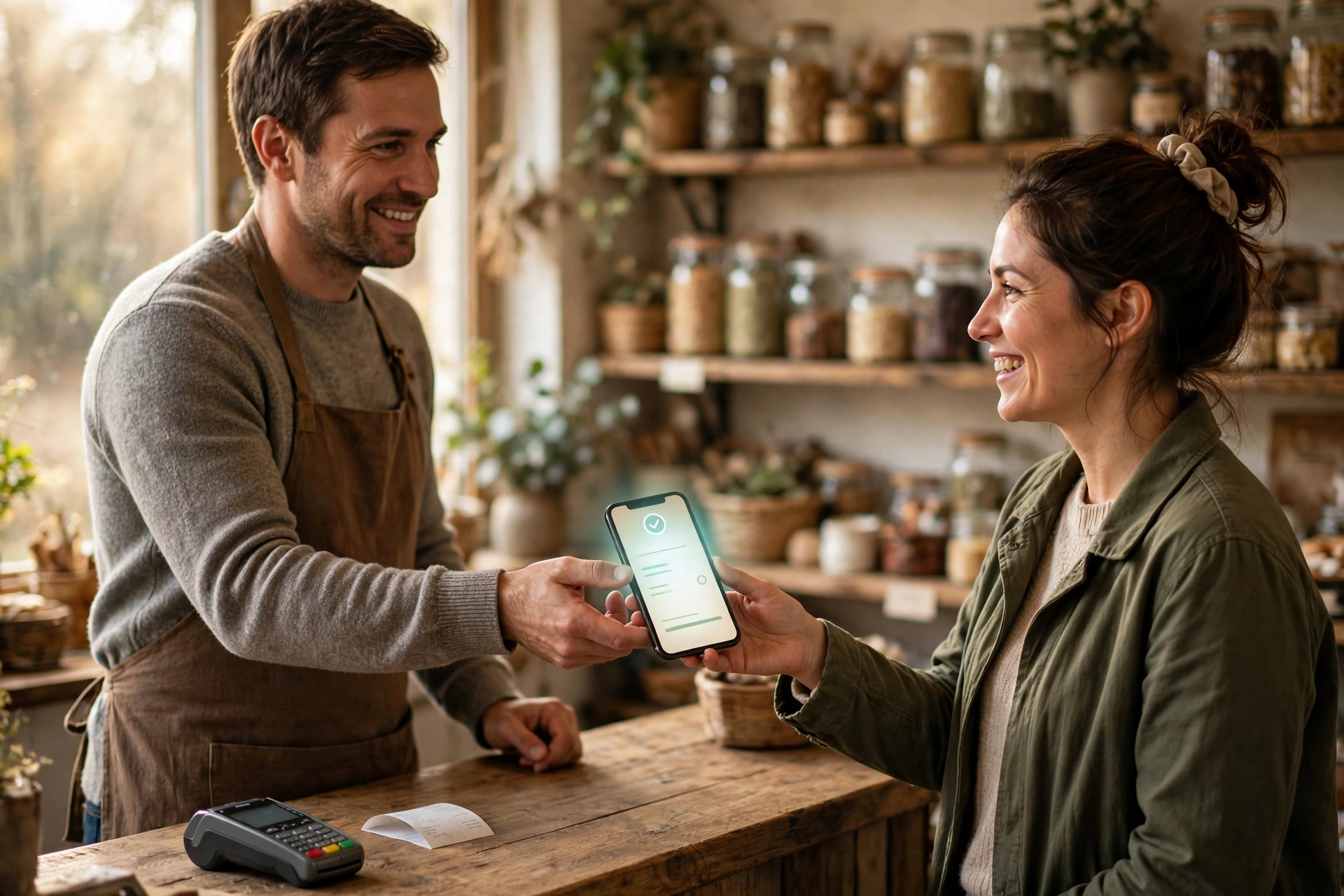
The paper receipt is already lost
Most paper receipts do not make it home in one piece. They end up crumpled in a pocket, at the bottom of a bag, or on the car seat, and by the time the customer needs one, for a return, a warranty question, or their own bookkeeping, it is gone. The sale was fine. The proof of it is what went missing.
A digital receipt is the same proof of purchase, sent to a place the customer already checks: their phone or their inbox. It costs the shop nothing extra to offer, it takes a few seconds at the till, and it turns the most common awkward conversation in a small shop, "I lost the receipt, can you still help me?", into a quick search instead of a shrug.
What a findable receipt needs
A receipt is only useful if both sides can read it later. Whatever your till or card machine sends, check that it carries these five things:
- Your shop name, so the customer knows who they bought from.
- The date and time of the sale.
- Each item, in plain words, not a code only your stock sheet understands.
- The total paid, and how it was paid: cash, card, or mobile.
- A way to reach you, such as your shop phone number or email address.
For card payments, the receipt should show only the last four digits of the card, the way the card machine prints it. Never write down a full card number, and never photograph a customer's card. If a receipt shows more than the last four digits, that is a setting to fix on the card machine, not something to work around by hand.
Offer it at the till, in one sentence
The offer has to be short or it will slow down the queue. One sentence is enough: "Would you like the receipt by text or email, or printed?" Most customers will pick one without thinking, and the ones who want paper can still have it.
If they choose text, type the number once and read it back to them before sending. A receipt sent to the wrong number is worse than no receipt, because the customer will assume it is coming and never check. If they choose email, spell it back the same way. It takes five seconds and it saves the whole exercise from failing quietly.
Keep the printed option. Some customers prefer paper, some pay cash and want something in hand, and some simply do not want to share a number or an address. Paper is not the enemy here; a receipt nobody can find later is.
Keep your own copy the same way every time
A receipt the customer can find is only half the job. Your copy has to be findable too, or the return conversation still ends in guesswork. Most card machines and till systems already keep a record of every sale. The mistake is keeping a second copy somewhere else, in a notebook, a photo album, or a personal email account, so nobody knows which copy counts.
Pick one place for your records and use it for every sale, every day. At the end of the day, check that the day's sales are all there before you close. If your system lets you search by date, amount, or the last four digits of a card, learn that search now, while the shop is quiet, not while a customer is standing at the counter waiting.
When a customer comes back without a receipt
Sooner or later someone will come back with no receipt at all, paper or digital. That is normal, and it is the moment this routine earns its keep. Ask for two things: roughly when they bought it, and what they paid. With a date and an amount, most till records can find the sale in a minute.
If you find it, say so, and handle the return or exchange the way you normally would. If you cannot find it, say that plainly too, and offer what you can under your usual approach, such as an exchange or a look at the item itself. What customers remember is not whether you found the record. It is whether you tried, and whether the answer was honest.
What not to do
- Do not make an email address or phone number a condition of buying. The receipt is a service, not a toll.
- Do not add a receipt email address to your marketing list unless the customer clearly agrees to that separately. A receipt is not permission to send offers.
- Do not send receipts from a personal phone number or a personal email account. Use the shop's number or address, so replies and questions come back to the shop.
- Do not photograph a customer's card, and do not write down a full card number for any reason.
- Do not keep shop records in three different places. One system, used the same way every day, beats three clever ones used when someone remembers.
A one-week rollout
- Day one: check what your till or card machine already sends. Look at a receipt you sent yourself and check the five details above.
- Day two: fix anything missing, such as the shop phone number, and learn how to search past sales by date and amount.
- Day three: start offering the choice at the till with the one sentence above, and keep paper available.
- Day four: agree with the team on where the shop's copy lives, and stop keeping second copies elsewhere.
- Day five: try a practice return. Take a sale from earlier in the week, find it from the date and amount alone, and time how long it takes.
A receipt is a small thing, and that is exactly why it is worth getting right. It is the one piece of paper, or the one message, that connects a sale to everything that comes after it: the return, the warranty, the regular who comes back because the last visit was easy. Send it where the customer can find it again, keep your copy where you can find it too, and the next "I lost the receipt" will be a quick search, not a lost customer.